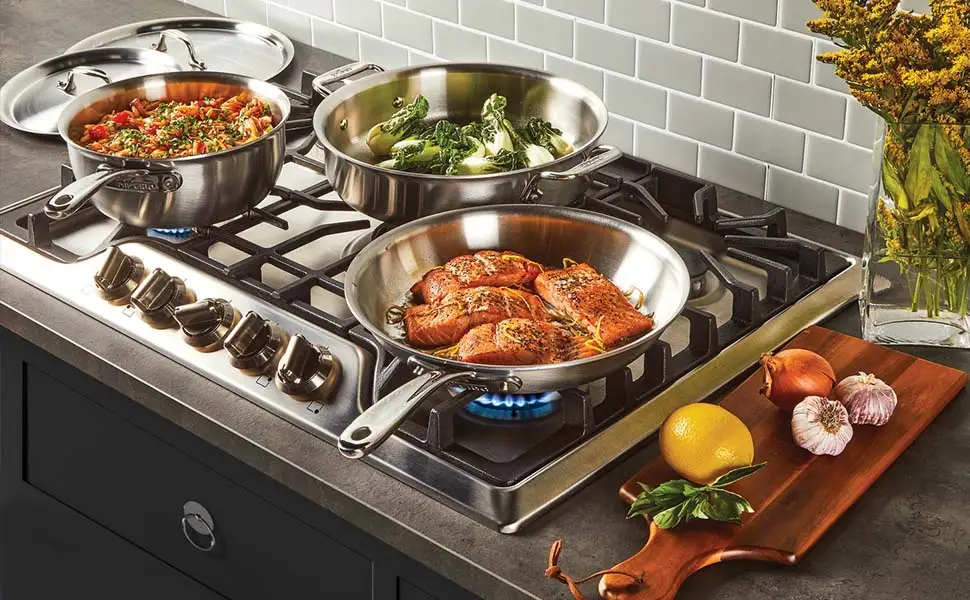
Pots and pans made of stainless steel are excellent for many reasons. I use them instead of nonstick pans for searing meat because they leave behind fond pieces that are perfect to start many dishes, like these sage glazed pork chops. You’ll learn how to get the most from your stainless steel pans, and avoid some mistakes that could shorten their lifespan.
Stainless Steel: Benefits
There are many types of cookware available, but stainless-steel pans are a great choice. Many brands are magnetic and can be used on induction cooktops. They’re also lighter than cast iron, more durable than nonstick pans. The stainless steel material does not react with any food, so it can be used for any type of cooking.
The answer is both yes and no. Aluminum is used in most inexpensive non-stick frying pans. It heats quickly, but it’s not suitable for high temperature cooking. A nonstick pan also prevents food from getting a good sear, because the coating stops the food surface from browning. It’s because of this that I prefer stainless steel pans, but a nonstick pan is worth it for foods like pancakes or eggs, which are notoriously sticky.
Cooking with Stainless Steel: Tips and Tricks
How to prevent food from sticking to stainless steel
It is the food that sticks to stainless steel pans when they are cooking. Two simple steps can prevent this. Always preheat your pan before cooking. Add a thin layer of oil to the pan after two or three minutes. The pan is ready for use when it begins to shimmer. Add a drop of hot water to the pan to see if it is ready to use. The water should emit a “TSS”, split into several droplets, and then evaporate.
Seasoning Stainless Steel
It is possible to season a stainless steel skillet in order to create a nonstick surface. The pan should be heated on medium high heat for two minutes. Add a thin layer (about 1/8″) of vegetable oil. Continue heating the pan for about 5 minutes, or until the oil begins to smoke. Let the pan cool down completely before removing the oil. The pan will now be non-stick.
Do not neglect the oven
You can use stainless steel pans to bake in the oven. Although Dutch ovens are the most popular pans for stovetop and oven, they can be used on the oven as well. You can check with the manufacturer if your pan is oven safe, but high-quality stainless is usually rated to temperatures of up to 500deg. They are great for making one-dish recipes of pasta, but they can also be used to cook thick steaks or pork chops in the oven after searing them on the stovetop.
Avoid these Stainless Steel Care Mistakes
If you treat it well, stainless steel cookware will last a lifetime. To ensure that your pots and saucepans remain like new, avoid the following mistakes.
Mistake #1: The Dishwasher is not the Answer to Your Problem
Although most stainless steel pots, pans, and utensils are dishwasher-safe. That doesn’t mean that you should clean them in that manner. Pots and pans can be damaged by long cycles of high temperature water and long cycle times. The handles may also become loose.
Mistake #2: The second mistake is to clean them before they have cooled.
The heat of the pot or pan can be warped by exposing it to cold water. This shock can also cause steam which can burn your hands. Let the pans cool before cleaning them. Cast-iron cookware also has specific cleaning instructions.
Mistake #3: Add salt to cold water
Many of our favourite pasta recipes require that the water be seasoned. It should be as salted as the sea, but recipes fail to specify when to do so. Add salt only after the water is boiling to prevent the pan from becoming irreversibly pitted.
Mistake #4: you’re not cleaning calcium buildup
It could take up to a month or more for you to notice the white chalky spots on your stainless steel cookware, depending on how hard your tap water is. The calcium deposits not only make your cookware look bad, but can also promote bacteria growth. Boil 3/4 cup of water with 1/4 cup of vinegar and remove them from the pan. After the pan has cooled, you can wash and dry it as normal.
Mistake #5: You have overheated the device.
You have probably overheated your pan if you notice rainbow stains around the edges that you can’t remove (even after vigorous scrubbing). Use vinegar to gently scrub the stains or cook tomato sauce in the pan. The acidity of the tomatoes can help to discolor the pan.
Mistake #6: You are not drying your pan
Hand drying pots and frying pans is not my favorite task in the kitchen! It’s unfortunately the only way to get rid of those harmless water marks on stainless steel. This only takes a few minutes, but makes a big difference.
Mistake #7: The pan is too charred.
Burnt bits are difficult to remove from any pan, but they’re especially hard to remove on stainless steel. Preheating pans will help you avoid this problem, as food tends to stick more to cold pans. You can use boiling water to remove burnt bits from a pan that has already been burned. No need for harsh chemicals or scrubber brushes. Here’s the best way to remove burnt food from pans if that doesn’t help.
Mistake #8: You’re using steel wool
It may seem like the perfect way to remove stubborn stains and burnt bits from your stainless steel pans, but it can also scratch their finish. You may even lose your warranty! Use only non-abrasive sponges and throw away the steel wool.
Mistake #9: Use the wrong cleaner
You may need to upgrade the cleaner you use if regular soap and hot water doesn’t work. Bar Keepers’ Friend ($12), a cleaner that works on all types of stains and mineral deposits, is a great option for cleaning your cookware. Combine it with water and rub it on the stain. Rinse it off after one minute. Easy, peasy!