Security cameras for homes today in the right location are an affordable and viable alternative to costly professional-installed systems. The crisp, high-quality 1080p footage, AI human and motion detection, battery lives that last for a long time and smart home integrations are excellent instruments for documenting or deterring the perpetrators of crimes.
Particularly difficult for DIY security novices is in the end, putting cameras in the right place. If you’re not assisted by a professional you’re likely to under- or overspend on cameras while you’re protecting your home or even install them improperly and make it easy for criminals looking to rob you to subvert their security.
We interviewed security engineers and product teams from Arlo and Eufy two security companies for DIY which sell DIY cameras as well as other security products and also asked for tips on installing the system as well as the most common errors made by their clients as well as other tips for installing an effective Home security solution.
What number of cameras do you really need to safeguard your home? Do you want your cameras wired or wireless, and visible or concealed, and constantly or motion-activated? What other technology is required in addition to cameras, if there is any? We’ve got the answers you require to enhance your security systems for home more efficient and more safe.
1. Be sure to guard every entry point
Each home has its own arrangement, which makes it hard to give specific guidance to a variety of DIY buyers. However, a good place to start is to monitor every entry point that is on the ground for anyone who is trying to get into your home.
Eufy suggested two to three cameras for outdoor use generally however Arlo advocated for “one camera per entrance” and suggested that the typical configuration they suggest is one for the front entryway and one for the side entrances, as well as an extra for the side or driveway entrance.
For a follow-up we wanted to know if cameras inside could be used to guard an entryway as well as an outdoor camera, in the event that you pointed it at an open sliding glass door with the blinds opened.
Arlo rejected this idea in his opinion, pointing out that many security cameras utilize infrared light to detect motion and that glass may block the infrared detector from functioning effectively. This means that it won’t be aware of the issue until someone actually got into your home.
They did recommend one of the top video doorbells to be a good solution to secure your front door.
2. Set cameras at the right distance and height
We inquired Arlo what errors its customers made the most often when putting up an alarm system for their home in addition, Arlo Engineer Mark Vartorella said that customers often placed cameras in poor locations and thereby limiting their effectiveness.
“Number one, they need to understand that the best range for motion detection is 5 to 20 feet for the passive infrared,” Vartorella explained. You must place your camera as close to the location where you wish to sense motion as close as you can to get the most accurate results.
People who purchase outdoor cameras that have wide-angle lenses may be attracted to guard as wide a space as they can and then putting it in a corner of the backyard to secure the entire backyard and even the side backyard at the same time. However, this could make it less effective in detecting motion and taking close-up videos at entrance points.
Additionally, you should to set your cameras up and then tilt them downward. Infrared sensors have a higher chance to detect relevant movements and prevent false positives if you focus downwards at a specific spot.
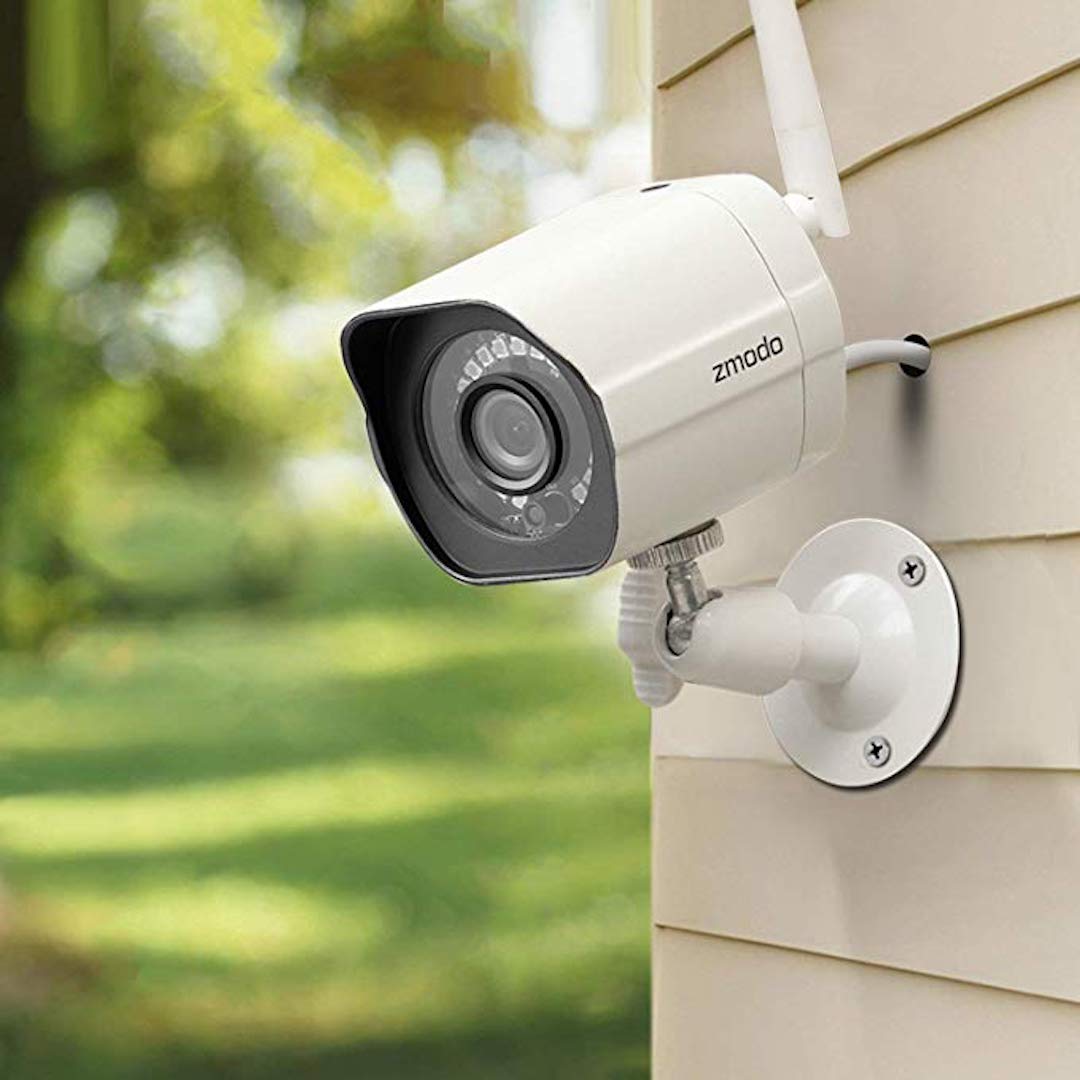
Eufy advised you to place the security cameras between 8 and 10 feet above the ground, and then tilt them from 15 to 30 degrees for the best motion detection. Arlo suggested that you place them at least 7 feet tall.
Vartorella explained that the other most frequent mistake that customers make is pointing their cameras horizontally and straight out to the street. Outside of outdoor cameras’ range of capture moving vehicles can cause alarms due to their hot engines act as blinding beacons for any infrared camera.
When your cameras are securely mounted and high up, pointing downwards toward a highly-trafficked zone, it’s much harder for someone to get past, or for someone to reach up and lower it to steal it or disable it.
3. Consider keeping your outdoor cams visible
Eufy’s market research indicates that the majority of its customers conceal their cameras so that they can capture video of intruders and burglars who aren’t aware. However, both eufy as well as Arlo have stated that visible cameras may (sometimes) perform better in the prevention of home security.
The two companies have both informed us that spotlight cameras can be an effective deterrent because they can alert nighttime burglars that they’re being watched.
If the user would like to frighten burglars or avoid burglars on their porch and burglars, then a visible camera or even a camera that has a the ability to shine is suggested according to the security product team said.
However, cameras may make potential burglars believe there’s something valuable to steal from your home. Even though the Arlo team claimed in our interview that visible cameras could deter the possibility of a burglary targeting your house but they then followed up to claim that they don’t have any evidence that suggests the one is superior to another.’
Therefore there is no final answer, but we I wanted to mention this idea regardless of what it is to think about.
4. Be sure that your internet provider will support high-resolution cameras
The majority of security cameras have a resolution of 1080p. However, a few firms (including Arlo and eufy) offer cameras with 4K or 2K resolutions. More pixels mean better footage that can be used to identify suspect individuals when you look over your footage.
While higher resolution might appear like a no-brainer however, the Arlo’s Mark Vartorella pointed out that it is important to ensure that your network is able to handle it. 4K streams require greater bandwidth, and therefore slow upload speeds and slower bandwidth can create problems’ he explained to us, specifically when you have multiple cameras or allow continuous recording.
It is possible to pay for faster download speeds, but the majority of users don’t care about the speed at which they upload, as is the reason you must upload video files in the cloud. One 4K camera or 2K camera, with high FPS, can be a challenge with low coverage.
Before you purchase your cameras, be sure to check your network’s Mbps requirements. Every 4K camera, like the Arlo Ultra 2. as an instance, needs 2-4 Mbps.
5. Apartment dwellers or in large brick homes might require wired cams
The team of Arlo spent a lot of the interview praising the advantages of wireless cameras. They are easy to mount on high or in atypical spots like trees, and there’s no concern about finding an outlet or an exposed wire that an intruder might cut off to stop the feed.
However, they pointed out that signal interference could cause problems in specific environments and houses that can cause cameras wired, or Power over Ethernet (PoE) cameras a better choice.
Multi-story homes can be bombarded by signals from all directions and can cause interference when trying to connect wireless cameras live feeds.
Homeowners, their biggest problem is the distance between each security camera and router, as well as any other obstructions that may be between them. The Arlo team stated that wireless signals from security cameras may have a harder time navigating through the wall of a brick cinder house than a home with thinner wallboards. The bigger your home will be, the greater chance that any wireless camera is unable to connect the router.
6. Storage of local video is more affordable and more secure than cloud storage.
We asked eufy if they had any suggestions for security best practices The team of eufy focused on one aspect that is called local storage.
“By storing your footage on a local SD card, which is only capable of being accessed by your own mobile device through a secure encryption, you can not only keep your house secure, but ensure your privacy as well,” they recommended.
The majority of security firms charge a monthly fee to store video in the cloud, therefore selecting cameras that support storage will help you save money over the long run. When video footage is stored in the cloud there’s always a possibility that someone can gain access to your password and gain access to private video remotely.
Local storage allows users to enable continuous recording for your security cameras, however Eufy stated that cameras that have motion-activated recording are adequate to meet the security requirements of most customers.’
7. Make your cameras more responsive by adding sensors as well as smart lighting
Arlo and Eufy both had similar recommendations when it comes in setting up security cameras However, the Arlo team had fewer thoughts on other security options that did not require cameras than eufy.
We questioned both groups as to whether the customers should rely on security cameras to be a complete security system or if they should back up their cameras up with door and window sensors.
The Arlo representative Chanel O’Connor stated that while sensors are useful but ‘information is what customers require to take a swift decision in a crisis and cameras provide greater live, real-time information on what’s happening than a sensor.
The eufy team however said that in order to build an ecosystem that is well-rounded for home use We’d recommend both cameras and sensors. Cameras can provide you with actionable security that which you can react to with a manual response, whereas ‘door’ or window sensors can set off rapid sirens to repel unwelcome intruders.
The eufy group was also enthusiastic about smart home automations, when questioned for his opinion on smart lights, particularly those that are triggered to turn on according to movements.
“Lights turning on when a camera detects motion is definitely a very helpful design, especially when it comes to deterring package thefts,” we were told by the company.
8. Conduct regular maintenance and check-ups
If you’re installing your own security cameras and self-monitoring cameras it’s your responsibility to ensure that the system is working properly and you don’t want to create the impression of security by having a number of cameras that are dead. We’ve created an inventory based on the details Arlo and eufy shared with us:
Be sure that when installing wireless cameras, you enable this on the exact network (2.4 or 5 GHz) as the base or hub to which the cameras are connected.
Make sure you check the battery’s level regularly and charge or replace batteries when you’re at home, to ensure that the camera doesn’t shut off for a long time while you’re at work.
If you’re experiencing issues uploading your camera feeds ensure you examine your internet speed as well as the health of your router/modem and ISP information. It could be necessary to upgrade your device or the service you are using.
Go through your video clips to see if someone you do not know makes an appearance
Get rid of old, insignificant recordings to free up space on the SD or cloud memory to accommodate fresh, relevant videos
Make sure you walk around across the front of each camera in order to test the motion-activated alerts it sends out and make sure that you get them all
Include these as regular parts in your routine for security and you’ll have your security system in top shape for longer. https://allroundsecurity.co.nz/home-cctv-cameras/