Unchecked, tree roots can cause havoc in your lawn. They can grow under your foundation, through your patio and even into your pipes. It’s crucial to be careful when working with tree roots, whether you have cut down a large tree or are trying to eliminate them from your property. We’ve compiled the best ways to kill tree roots. It takes patience and care.
Prepare To Kill Tree Roots For Removal
Most of the time, you will kill tree roots after removing the stump. The removal of the tree stump is essential to reclaim that area and prevent it from sprouting. Even if you only prune the ends of the roots at the tree’s end, you still need to prepare your land for root removal.
- You can remove the stump completely if you cut it as close as possible to the roots.
- Remove the top layer and turf surrounding the tree stump in order to reveal large lateral roots.
- Map out the potential reach of the roots after revealing the direction and size of the primary root system. This is again between two to four times the canopy of the tree when it was standing.
- Check to see if the roots can interfere with your sewer mainline, smaller pipes or sprinkler systems.
- You should call a tree service if you are concerned that the roots will interfere with the utility systems. This is to prevent damage. Also, speak to your utility company about the best course of action.
How to Get Rid and Kill Tree Roots
After removing the tree stump, you can now move onto the roots. It will take several months to completely kill large, old roots. Plan accordingly if your spring garden is on the schedule.
Manual Removal
You can easily remove the roots of a young tree by using basic gardening tools and your hands. In this situation, we recommend collecting:
- Work gloves
- Garden hoe
- Root lopper
- Spade
- Hang saw or reciprocating Saw
Here’s a simple way to remove roots from your lawn and kill them manually:
- Remove the soil around the stump to expose the roots.\
- You should eventually be able anchor the spade or hoe delicately under the root, and loosen it from the soil.
- You can follow the roots with a spade by pulling the root upwards.
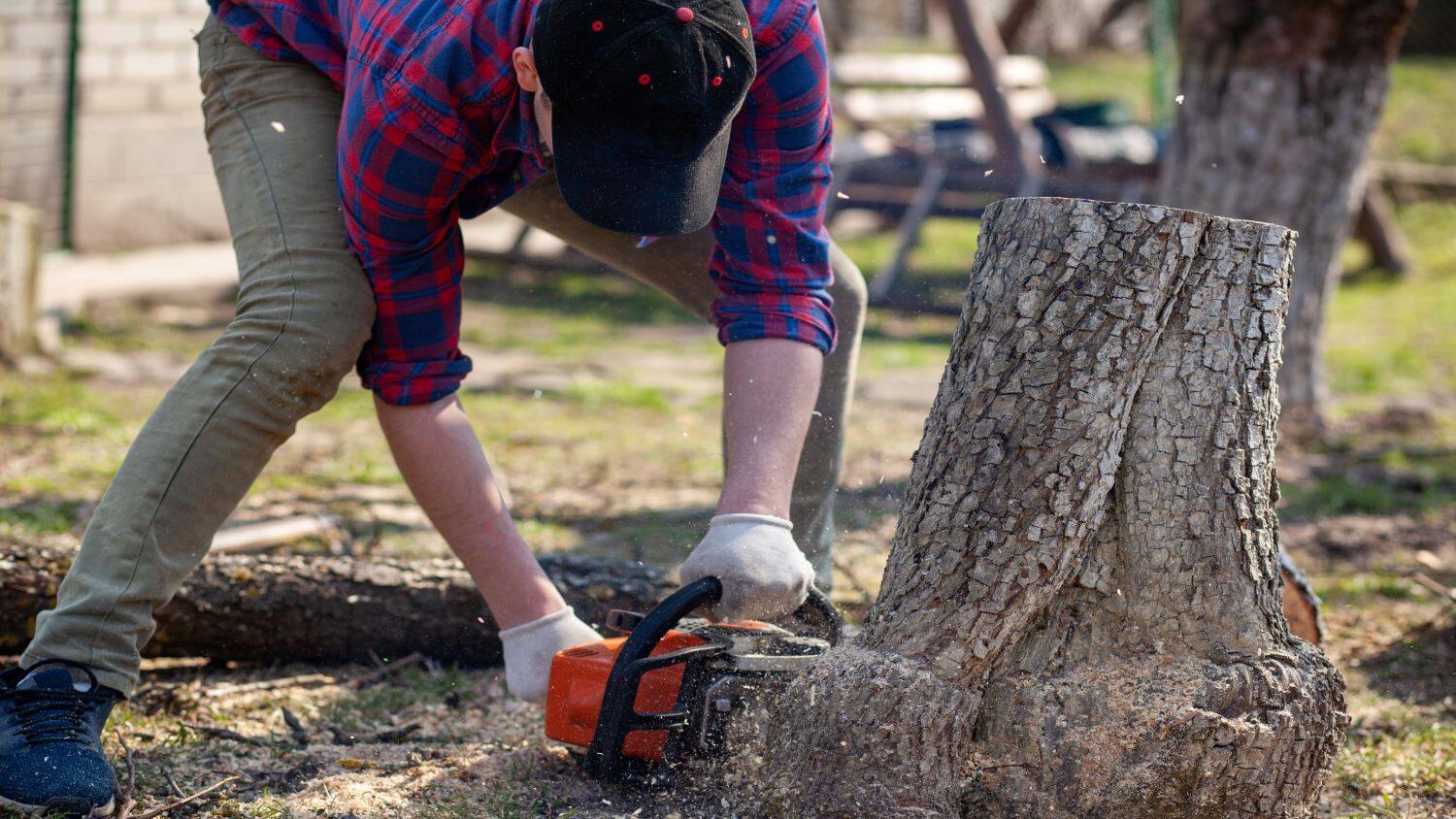
- Use a power saw or loppers to remove the large portion of the roots from the stump.
- Avoid damaging your landscape by moving slowly as you pull the length of the roots.
Salt
Chemical methods such as Epsom salt or rock salt can be used to kill tree roots. This method is a good alternative to removing the stump of a tree. It can remove everything at once. What to do.
- Use a 1 inch drill bit to drill up to 6 inches deep into the stump, or the exposed roots.
- Fill the hole up to the top of the hole and pack it with rock salt.
- The water will allow the rock salt to penetrate the roots, speeding up the death of the plants.
- Check the holes in the tarp every two weeks.
- Fill the hole with water and rock salt until you see the roots and stumps begin to wither.
- After that, it is easier to remove large roots by hand.
Chemical Herbicide
Herbicides containing glyphosate are similar to rock salt in that they kill the roots of trees. You must, however, be careful to not kill all the vegetation around your stump if you use the solution.
- Buy a glyphosate based herbicide that is strong enough to kill tree roots and stumps.
- Wear protective equipment, such as gloves, goggles and a mask.
- Use a spade or an ax to cut the stump at its lowest point, exposing just the tops and roots of the tree.
- Water soaked into the roots and stump will help the herbicide absorb.
- Follow the instructions on your herbicide container to dilute your solution. Cover your stumps and exposed roots. Apply the herbicide carefully, not spreading it beyond your concentrated area.
- Wait approximately two weeks to see if the herbicide kills the remaining stump and tree roots.
Stump Grinder
You may also be able remove some large surface roots if you decide to rent a stump grinding tool and learn to use it. Renting a stump grinding tool can save you between $190 to $270 per day, and the labor cost which is typically around $150.
When used incorrectly, a stump grinding machine can cause significant damage to your lawn as well as any underground utilities. Use the stump grinder only in the area surrounding the stump and after confirming that there aren’t any pipes or wires below the surface.
Stop grinding the stump when you reach between 6 and 8 inchs below the surface. You will have to remove the rest of your roots chemically or manually.
Root Pruning
When cutting roots close to your tree, we recommend that you work with an arborist who is certified. Even if you are far from your tree, removing and killing the roots can cause serious damage to its health. If you want your tree to live, it’s not a good idea to kill its roots. You may have to prune your trees if they are getting too close to a house, patio or garden.
Here are some tips on how to remove small roots from your tree.
- Before attempting to remove the roots, make sure that your tree is healthy.
- Remove only those roots that are outside of the drip line.
- Call a professional if you need help removing roots from the drip line of a tree.
- Avoid cutting roots that are larger than 3 inches.
- Do not remove more than 25 percent of the root system.
- After cutting the roots of your tree, take special care to ensure that it heals properly.
Why Do You Need To Kill Tree Roots?
The roots of a tree can extend up to four times as far above the ground as the drip line, which is the point at which the branches are the longest. These roots can wrap themselves around underground wires, pipes and sprinkler systems. These roots can grow above ground, causing a trip hazard and even tearing up your patio pavers.
You’ll have to know how to kill roots in two situations:
- You have recently cut down a tree.
- To protect your landscape, you need to prune the tree roots.
You can leave the roots of the tree in the ground after removing the stump and the tree, but this could interfere with gardening, the planting of new trees, utilities and hardscape.
Remember that removing roots from a tree while it is still alive can cause significant damage to its health, and may even result in the tree’s death. If you are unsure at any point in the process of removing the roots, call a professional arborist for help.
Landscape Tips for Removing Tree Roots
The removal of large roots can create a mess in your yard. Here are some landscaping tips you should keep in mind when killing tree roots.
- Do not use a winch to pull out roots or garden tools too quickly. Slowly move to protect your landscape as well as possible utility lines.
- Digging to find large roots requires you to remove large rocks.
- Consider reseeding and amending soil in the area to encourage new grass growth.
- Plant a new garden in the place where the tree used to be, especially if the stump and roots have been removed.
- Wait for the large roots to decompose completely before planting a tree. Avoid tree species with problematic root systems and choose a native tree to your area.
DIY vs. Hiring a Professional
It all comes down to:
- Size of the Tree
- Tree species
If the roots are causing problems with your house or utilities
You can remove smaller trees that have short roots on your own. If you decide to rent a stump grinder, all that will be required is the rental fee. Call in tree removal or maintenance professionals if the tree is near power lines or large.
Cost to Kill Tree Roots and Remove Them Professionally
The cost of hiring a professional to remove and kill tree roots is between $100 and 200 per hour. Some companies include the cost of removing a stump in their average price range between $170 and $500. To get an accurate estimate, consult a professional tree removal company and give them the details of your job.