Floors can cause a significant amount of heat loss in your home, accounting for around 10% of all heat loss. Underfloor insulation is a great way to help reduce heat loss and ensure that your home has a complete thermal envelope.
This guide will explain your options for underfloor insulation in modern homes with concrete foundations and in traditional houses with wooden floors suspended. We will also look at how much it costs to install underfloor insulation and whether or not you can do it yourself. A thermal envelope around your home will help you stay warm during the winter months and reduce your energy costs.
Underfloor Insulation For Suspended Wooden Floors
Since the early 1800’s, suspended wooden floors have been installed in houses. Prior to the early 1700’s, houses were built with either solid bricks or bare foundations. These methods could be susceptible to damp. Air movement was achieved by building a suspended floor with wooden joists over a void and airbricks/vents in the exterior walls. This solved the dampness problem, but created another one, namely draughts in the house’s floor. Uninsulated or badly insulated wooden suspended floors can cause heat loss. This can be prevented by using underfloor insulation.
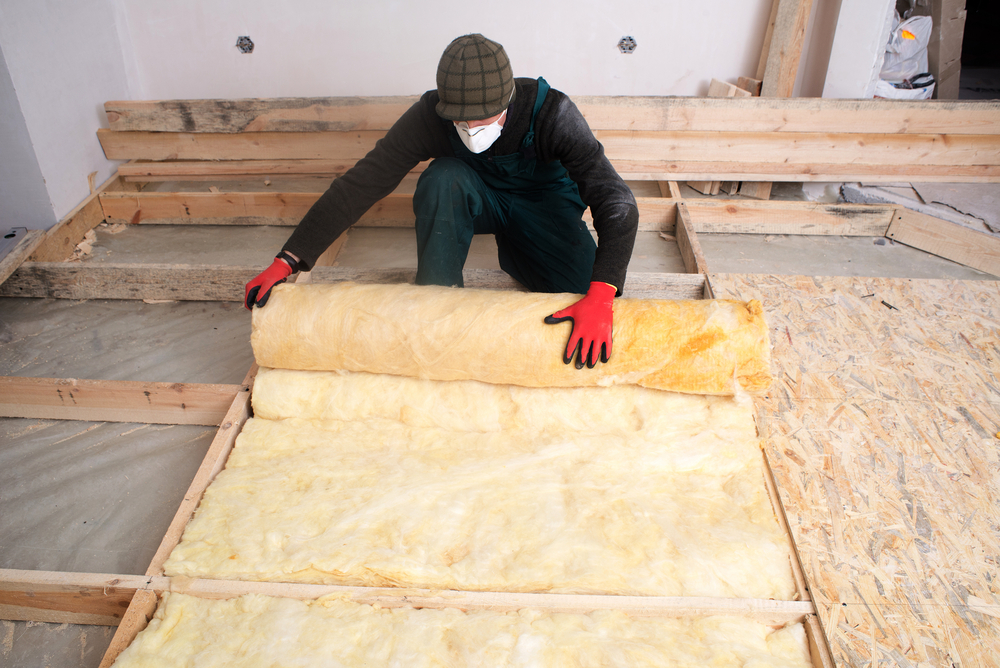
Installing insulation between floor joists is the best way to insulate suspended wooden floors. You can choose between mineral wool fibre rolls or underfloor insulation. You can use a ladder to install insulation under the ground floor if your suspended timber floor sits above a basement or cellar that is not heated. Most UK homes have a small space below the wooden floor. In a house where there is a small space below the wooden floor, it may be necessary to remove all floorboards as well as any floor coverings.
It can be time-consuming and expensive, especially if your floorboards are covered with carpet or tile. Redecorating and insulating your home at the same time can help you save money and give your suspended timber flooring a fresh look. Some homes, particularly those with a small, connected void, have an access point that allows an installer to enter the crawl space. It will be a difficult and professional job but it can save you from removing your floorboards.
Solid insulation boards will need to fit snugly between the floor joists if you use them. To secure the rigid insulation boards within the joists you can attach small wood battens to the inside of the joints. Fill any gaps between the boards and the joists with insulation sealant. The building regulations stipulate that 70mm of foamboard underfloor insulation is required.
You will need to install netting under your floorboards in order to use beneath floor insulation rolls. The insulation rolls can be cut down to size and installed snugly between the joists. A vapour control layer is then applied over the joists. The vapour control layer can resist any penetrating dampness. Sheeps wool insulation is breathable. The building regulations call for 150mm of underfloor blanket insulation.
After the insulation has been installed, it can be difficult to remove floorboards. However, if you do so carefully they can easily be replaced. Draught-proofing gaps between the floorboards is an alternative to underfloor heating. It can reduce heat loss due to draughts. You can do this with compressed foam rods, papier-maché sealants, or small pieces of treated wood. Modern alternatives to underfloor insulation include using remote-controlled robots that spray insulation beneath wooden floors. These would be professional installations.
Insulation of concrete floors under the floor.
In the decade following the war, concrete floors became very popular. This was partly because of restrictions on the importation of timber. Concrete foundations are large blocks of concrete that have been poured in the exact size of the home they will support. Although it is technically feasible to install underfloor heating below concrete foundations this process is extremely expensive and involves the removal of concrete floors. Most homeowners will find it more cost-effective to install insulation over a concrete slab.
To install insulation on a solid concrete surface, you will need to remove any flooring that is currently installed. Saving money by combining underfloor insulation and redecorating is a good idea. Install a damp-proof membrane over the concrete floor once you’ve stripped it down. It is important to do this to prevent condensation and keep your insulation effective. Then, you can lay boards of insulation on your floor. Attach them with adhesive tape and seal the joints with water-proof tape.
You can finish your floor with timber boards. They should have a tongue-and-groove design. acrylic timber screed can be used to glue them together. The floor must have a gap of 10mm around the perimeter. This is filled in with expansion strips made from cork. Then, you can add skirting boards to the expansion strips and then finish your floor with tiles, carpet or lino.
Underfloor insulation is a challenging process for DIYers. You will need to remove skirting boards and doors before you can measure, cut, and fit a variety of materials.
How much does underfloor insulation cost?
Professional installation of underfloor insulation in a semi detached house can cost between PS1200 to PS1725. Underfloor insulation is a complicated procedure that can be beyond the capabilities of amateurs. The cost of replacing damaged floorboards or flooring that is removed from suspended floors can also be high. You can save around PS500 by doing the job yourself, since it takes a professional about 3 days to install underfloor insulation.
We offer a wide range of underfloor insulation.
Direct has a range of underfloor thermal insulation boards and rolls for sale. Delivery options are available across the UK. To increase the energy efficiency in your home, we offer a variety of underfloor insulation sheets as well as roll. Accessories for underfloor insulation are available, such as damp proof membranes, waterproof tape and vapour control layer. We offer all the products you need to install underfloor insulation at affordable prices. https://betterplasterersltd.co.nz/service/insulation/